Protect yourself from venue damage claims: four prevention steps that keep your deposit safe
 Save
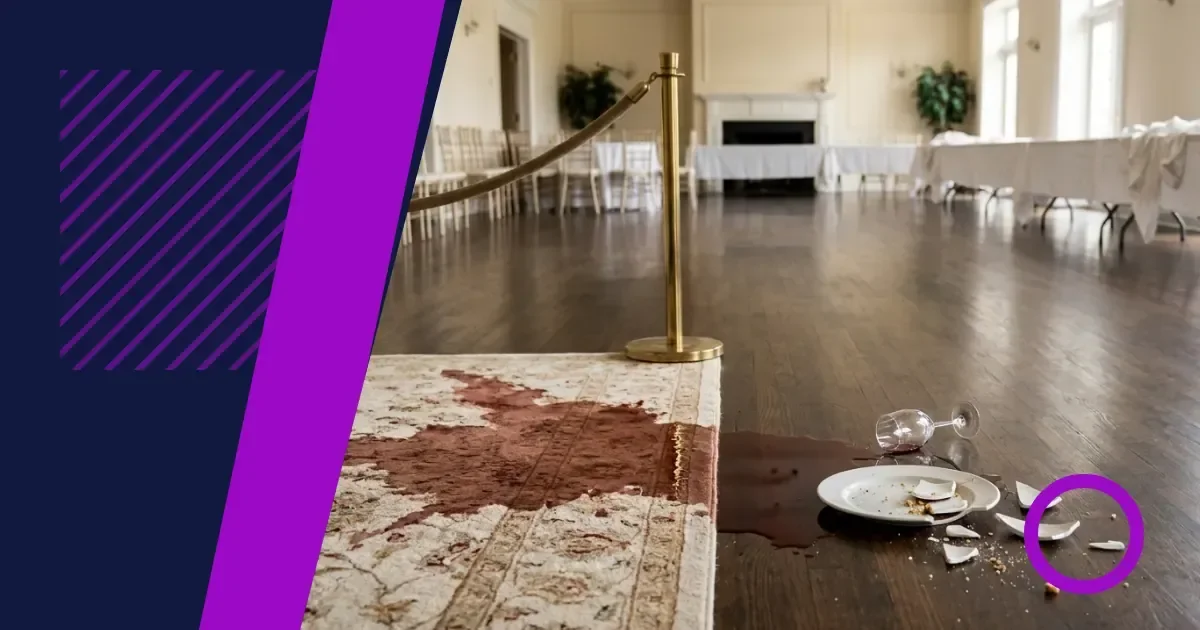
When you hire a venue, you become responsible for damage that occurs during your event. The hirer, not individual guests, is typically liable for any harm beyond ordinary wear and tear. That responsibility is set out in your hire contract and determines whether your deposit is returned in full. Central Square explains how liability works, how venues assess damage, and the practical steps that keep your event safe from unexpected charges.
Know what you're liable for under your hire agreement
Your venue hire contract makes you responsible for the condition of the space during your booking. That includes damage caused by anyone you invite, whether it's a guest spilling red wine on upholstery or a child breaking a window. The venue holds you accountable because you control who enters and what activities take place.
The contract distinguishes between damage and ordinary wear. Scuffed floors from dancing, minor spillages cleaned promptly, and small scratches from moving furniture usually fall within normal use. Broken fixtures, stained fabric that cannot be cleaned, or structural harm such as holes in walls sit outside that boundary. Venues expect the space to be returned in the condition documented at handover, allowing for reasonable use.
Your liability typically covers the cost of repair or replacement, and in some contracts, any loss of income if the venue cannot be hired while repairs are completed. Read the damage clause before you sign. Some agreements cap liability at the deposit amount; others leave it open-ended, meaning you could be billed beyond what you paid upfront.
Understand how venues assess and charge for damage
Venues inspect the space before you arrive and again after your event ends. The hirer is usually invited to walk through with the venue manager at both times, noting the condition of floors, furniture, walls, equipment and fittings. Photographs taken during these inspections create a record that settles disputes later.
When damage is found, the venue obtains a repair quote or replacement invoice. You receive an itemised account showing what was damaged, the cost to fix it, and any supporting evidence such as a contractor's estimate. Deductions are taken from your deposit first. If the cost exceeds the deposit, the venue invoices you for the balance.
Disagreements often arise over what counts as damage rather than wear. A venue may claim that marks on a wall require repainting, while you argue they are superficial and can be wiped clean. Ask for a second opinion or obtain your own quote. Where contracts include an independent valuation clause, either party can request a surveyor's assessment, with costs shared if the claim is upheld.
Challenge unfair charges with evidence from your own inspection
Disputes are easier to resolve when you have your own documentation. Photograph and video the venue when you collect the keys, paying attention to existing marks, stains and wear. Capture close-ups of anything that could later be blamed on your event. Repeat the process when you hand back the keys, before the venue's final inspection.
If you receive a damage claim you believe is unjust, respond in writing within the timeframe your contract specifies. Attach your photographs and note any pre-existing damage you recorded. Point out discrepancies between the venue's claim and the condition you documented. Where the venue cannot prove the damage occurred during your hire, it weakens their case for withholding your deposit.
Contracts governed by English law allow you to take a deposit dispute to the small claims track if the amount is below the court's threshold and the venue refuses to negotiate. Most venues prefer to settle rather than defend a claim in court, particularly when your evidence is clear.
Prevent damage before your event begins
Reducing the risk of harm protects both your deposit and your relationship with the venue. The steps below keep common problems at bay.
- Brief your guests on venue rules before the event, covering restrictions on decorations, smoking areas and access to restricted rooms.
- Hire or designate someone to supervise activities that carry higher risk, such as children's games, dancing near fragile items, or catering in spaces not designed for food preparation.
- Use protective coverings on floors and furniture where spillages or contact with decorations could cause staining, and check that coverings are allowed under your contract.
- Arrange collection of hired equipment and decorations immediately after the event ends, reducing the chance that items left overnight are damaged or misplaced and blamed on your hire.
Venues appreciate hirers who take practical care. A reputation for leaving a space in good condition makes it easier to negotiate terms or secure a booking at short notice in future.
Decide whether event insurance reduces your exposure
Public liability insurance covers claims made by third parties for injury or damage during your event. It does not cover damage to the venue itself; that requires a separate policy or an add-on clause for hired property. Some venues insist that you hold such cover as a condition of hire.
Policies aimed at private hirers often include a section for accidental damage to the venue up to a stated limit. Excess applies, meaning you pay the first portion of any claim. Weigh the premium and excess against your deposit and the likelihood of damage. For events with higher risk, such as parties involving alcohol or energetic activities, insurance can be a sensible layer of protection.
Check that the policy covers the type of event and the number of guests. Some insurers exclude certain activities or cap coverage where alcohol is served. Insurance requirements vary by venue type and event, so read both the venue contract and the policy wording before you commit.
Manage risks during children's parties and family events
Events involving children bring specific challenges. Supervision reduces accidents, but even well-behaved groups can cause unintended damage when playing in unfamiliar spaces. Restrict access to rooms not included in your hire and remove or cover breakable items within reach.
Speak to the venue about child-friendly spaces. Some have soft flooring, robust furniture and fixtures designed to withstand energetic use. Others expect hirers to provide additional safeguards. Selecting a venue with children in mind avoids mismatches between what the space can tolerate and what your guests will do.
Parents attending the event share informal responsibility for their own children, but legal liability still rests with you as the hirer. Make expectations clear in invitations and brief supervising adults when they arrive.
Handle damage that occurs despite precautions
Accidents happen even when care is taken. If something breaks or spills during your event, tell the venue manager straight away. Prompt reporting demonstrates good faith and allows the venue to take immediate action, such as cleaning a stain before it sets or securing a broken fixture before anyone is injured.
Offer to arrange or pay for repairs on the spot where practical. Many venues prefer a swift resolution over a protracted deposit dispute. Agreeing a fair price for minor damage at the time avoids inflated quotes later and preserves goodwill. Get any agreement in writing, noting what was damaged and what you have agreed to pay.
Where the damage is significant and the cause is unclear, resist pressure to accept liability before you have reviewed your contract and your own records. You are entitled to see evidence that the damage occurred during your hire and that the cost claimed reflects the true expense of repair.
Compare how deposit terms affect your protection
Venue deposit structures vary, and the terms attached to your deposit shape how disputes are handled. The table below compares common arrangements.
| Deposit Type | What It Covers | Your Protection |
|---|---|---|
| Fixed damage deposit | Damage only, with hire fee paid separately | Returned in full if no damage found; liability capped at deposit amount in some contracts |
| Combined deposit | Secures booking and covers damage | Hire fee deducted first; remaining amount available for damage claims |
| Refundable bond held by third party | Released only when both parties agree, or by adjudication | Neutral holding reduces risk of wrongful retention by venue |
Deposit terms set the framework for resolving damage claims, so review them before you hand over money. A clause that caps your liability gives certainty; an open-ended clause leaves you exposed if damage costs exceed the deposit.
Clarify liability where suppliers or contractors are involved
Caterers, decorators, entertainers and equipment hire companies bring their own risks. Damage caused by a supplier during setup, service or breakdown is still your responsibility under most hire contracts, because the venue holds the hirer accountable for everyone on site during the booking.
Ensure your suppliers carry their own public liability insurance and request a copy of their certificate before the event. Where a supplier causes damage, you can claim against their insurance rather than paying out of pocket. Some hirers include an indemnity clause in supplier contracts, making the supplier liable for any damage they cause and any costs passed to the hirer as a result.
Coordinate access times carefully. Suppliers arriving before or staying after your booked hours may not be covered by your contract, and the venue may refuse to admit them. Clarify catering and supplier access in advance to avoid last-minute disputes over who is responsible for damage during setup.
#Damage liability #Deposit #Contract terms #Insurance
Download PDF: Venue Damage Prevention Checklist PDF, 28 KB
Frequently asked questions
Am I responsible if a guest damages the venue I hired?
Yes, the hirer is typically liable for damage caused by anyone attending the event. Your hire contract makes you responsible for the condition of the space, and the venue will hold you accountable for repair costs, usually by deducting them from your deposit.
Can a venue charge me more than my deposit for damage?
It depends on your contract. Some agreements cap liability at the deposit amount, while others allow the venue to invoice you for the full cost of repairs if it exceeds the deposit. Check the damage clause before signing to understand your exposure.
How do I dispute a damage charge I believe is unfair?
Respond in writing within the timeframe your contract specifies, attaching photographs you took during handover and collection. Point out any pre-existing damage or discrepancies in the venue's claim. If the venue refuses to negotiate and the amount is within the small claims threshold, you can take the dispute to court.